
INSTRUCTIONAL DESIGN
I’ve created many diverse educational experiences that have helped learners acquire knowledge, develop skills, or change behavior in an efficient, effective, and engaging manner. By combining principles in adult learning theory and neuroscience along with 12 years of designing curriculum in traditional and virtual classrooms, I feel pretty good about my ability to create training materials, courses, and programs tailored to specific learning objectives and audiences. Below are just a few (but not exhaustive) examples of digital learning aids/products I have created over the years.
HSE COMPANY TRAINING
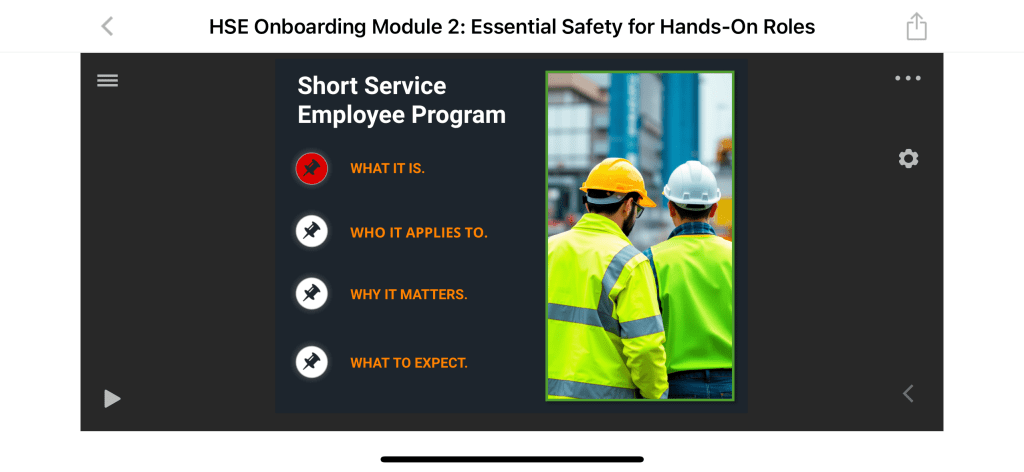
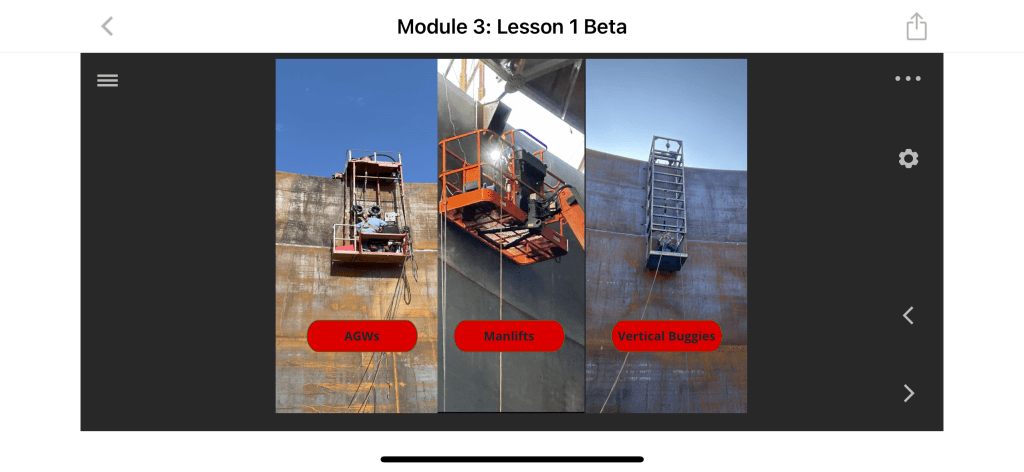
HMT Tank – Reimagining Compliance for a Hands-On Industry
When I joined HMT, one thing was clear: most compliance training misses the mark. It’s too broad, too corporate, and doesn’t speak to the realities of tank construction, welding, or field service. So I built something different—three immersive, one-hour modules designed for the tank industry, not just about it.
Each course combined AI-generated imagery with real HMT photos, employee interviews, and case studies that brought the company’s safety culture to life. Learners heard from foremen, welding supervisors, executives, and even a Unity game developer whose animations turned complex hazards into relatable moments.
Before building, I spent time getting to know the learners themselves—what devices they used, how they liked to engage, and what made training feel accessible and worth their time. That research guided everything from layout and pacing to custom mobile scripting in Articulate Storyline.
The modules were tailored to different audiences: corporate employees gained a deeper appreciation for field operations, while technicians experienced training built around their real work environments. After launch, I continuously refined the content based on feedback, improving clarity and interactivity with each iteration.
The result? Employees called it “the best training they’ve ever had.” It not only met OSHA expectations but also created lasting engagement through follow-up microlearnings released throughout the year—each one reinforcing HMT’s core message: Safety isn’t just a rule. It’s who we are.
Animated Explainer Videos
NAVIGATING UNION DISCUSSIONS: HOW TO STAY NEUTRAL
I created this short video using the software POWTOON to reiterate the strategies HR professionals can use to maintain neutrality when employees encounter questions or soliciting advice about joining unions (a hot topic at a previous workplace of mine). This video is a great follow-up reminder to a more comprehensive live training.
CURRICULUM PLANNING
Sample: Blizzard’s Design Program
I had the pleasure of working with Blizzard co-founder Allen Adham on creating a ‘Design Curriculum” for all game designers in the company to help their career trajectories and to help design-adjacent professionals work with designers. This was a really fun task that involved a lot of stakeholders and projects along the way. Below, I share some pieces of the planning and final products that came out of our collaborations.
The Proposal
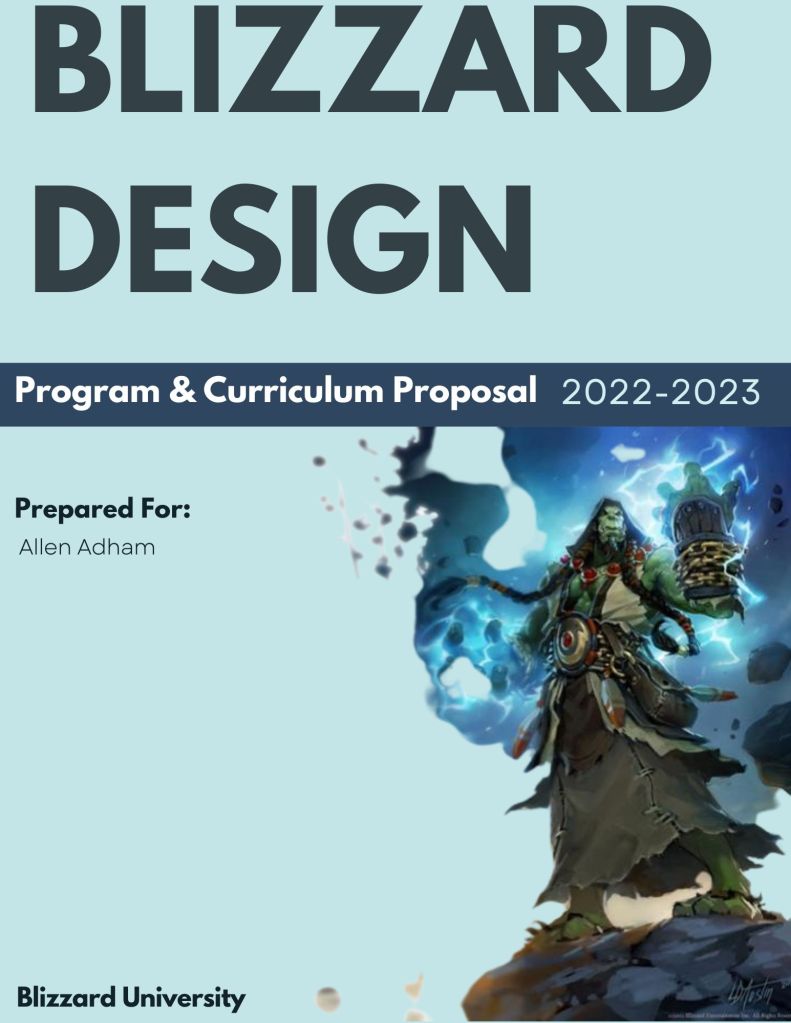
To kick off the project, I put together a program and curriculum proposal outlining my pitch for the educational content, objectives, materials, resources, and instructional programming for the overall design curriculum, based upon Adham’s desired learning outcomes.
What resulted was a 4-phase plan designed to not only help designers with professional development but build connections and community with colleagues.
Click the button below if you’d like to check out the whole program proposal.

Phase 1: Design Principles
To coincide with the company’s global relaunch of their learning and development program, Adham presented a talk on Blizzard’s Design Principles for a hybrid audience of 60 in-person attendees and over 400 virtual attendees across the globe. The talk became the foundation for Adham’s 2023 talk at the Game Developers Conference, the game industry’s leading professional development and networking conference. For this phase, I edited the video clips in Adham’s talk (available for members of GDC vault), handled registration, A/V and streaming needs, coordinated with facilities, and measured feedback from the presentation.
Phase 2: Design Hub (Learning Depository)


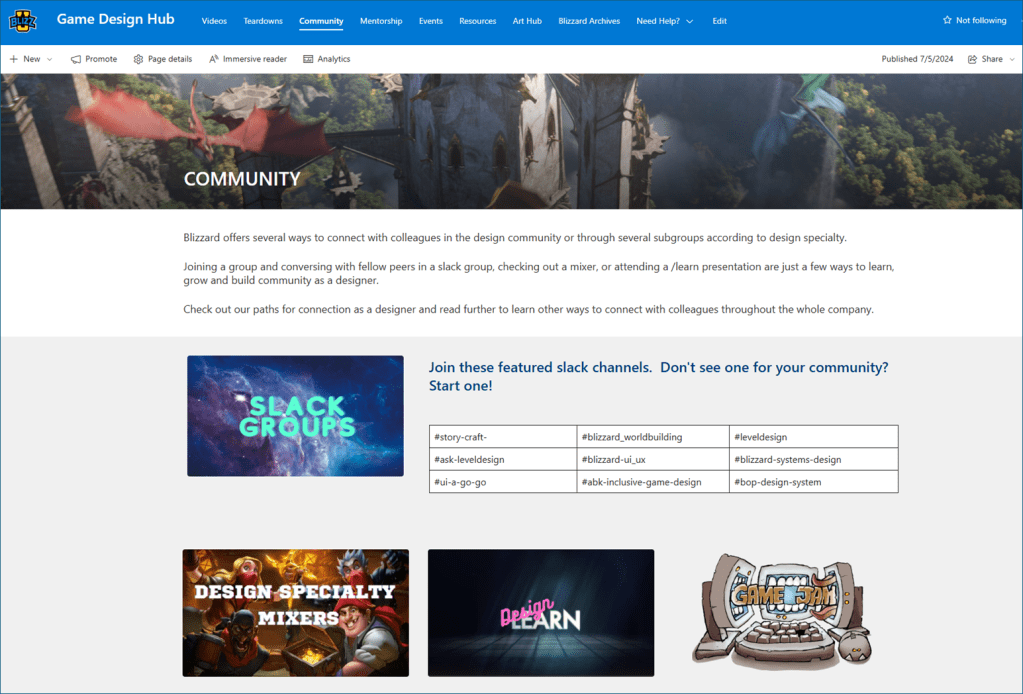
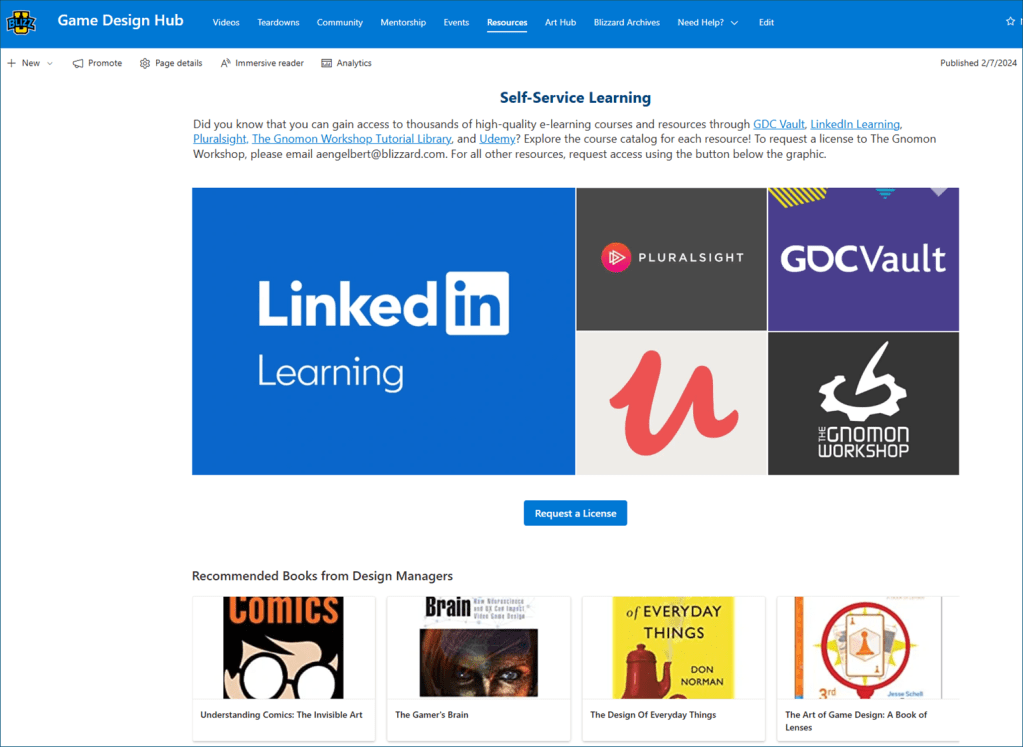
For phase 2, I worked with an expert UI/UX Product Designer to create a customized content management system for designers through a Sharepoint site. Above are four sample pages from the multi-page site. The site included access to 890+ videos touching upon game development, curated into playlists according to discipline. Additionally, the videos tab included “must watch” videos from leadership, ranked in order of importance. Other features of the hub included game tear downs (these are videos produced by the product and marketing department that detail the success or failures of competitor products), a community page listing how to get involved in various slack groups or take part in professional development and networking groups, an events tab to register for summits, mixers, /learns (that’s what we called out professional development talks and workshops), and self-service learning options and recommended books. The DEsign Hub was ever evolving.
Phase 3: Building a Community of Learning and Connection
This phase was all about giving designers opportunities to learn from and connect with each other. Below are some the initiatives I launched during this phase of Blizzard’s Design Curriculum Program.

/Learn
Learn is what the company called any educational talk or workshop. I sourced an internal SMEs to present on a topic quarterly. I presented pitches to the Design Council (who had the final say) and then worked with those presenters to plan an engaging presentation or workshop that encouraged the transfer or knowledge or identify areas of learning for further investigations. I then recorded these sessions, collected survey feedback, and catalogued the edited recordings (I cleaned up sound, added transitions, etc) on the Design Hub.

/Mixer
I launched monthly discipline-specific mixers and slack groups from game designers. The usual format for these mixers would include networking time, a short presentation on a new tool or best practice from a community member, and then Q&A time. Later on, I reached out to design leaders at Xbox to merge our communities to learn from each other and grow connections– which resulted in sourcing presentations from studio-wide summits.
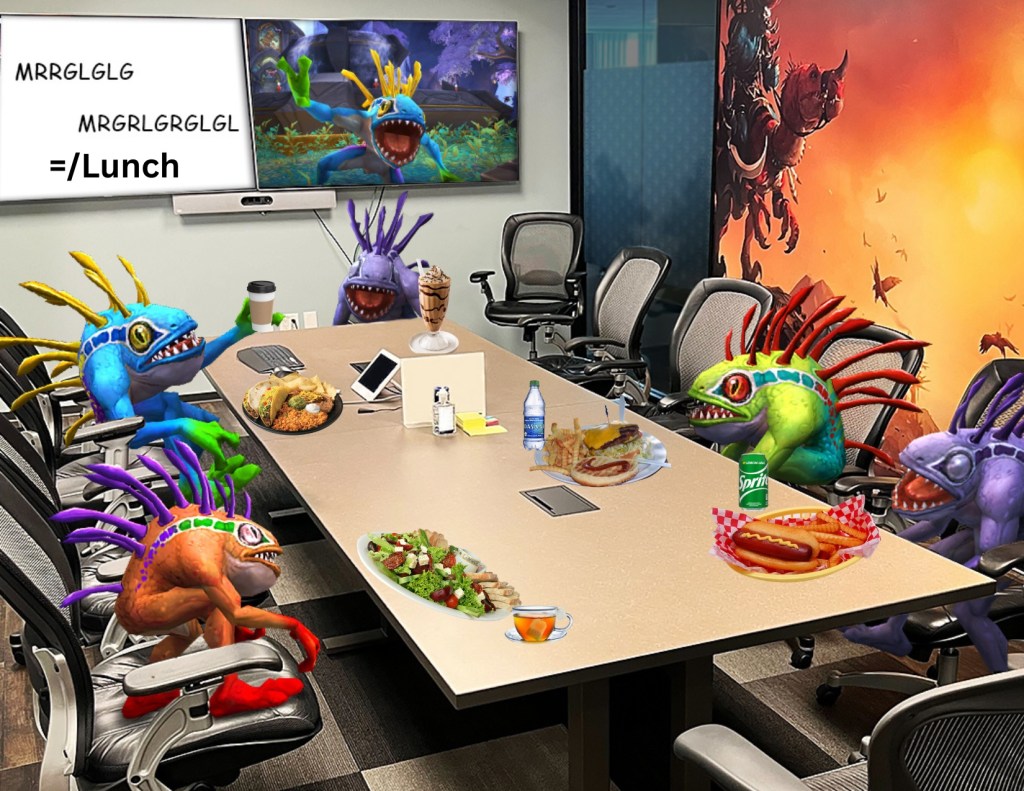
/Lunch
The /lunch program was a really fun initiative where designers across disciplines and career levels could meet up with colleagues to connect and talk shop. Quarterly, I would put designers into groups of four according to location and mode preferences. I also kept track of who net with whom so that there weren’t repeats in subsequent iterations. Eventually I scaled this program to our engineering, QA, production, and art department-matching around 400 game developers per quarter.
“Being able to meet other people across Blizzard is a really wonderful opportunity to learn more about different teams and also share your experiences. It’s a welcoming way to step outside your day-to-day routine and build new friendships and learn from each other in a casual, fun space! I have learned so much about different roles and vast experience each person brings. It’s a program I definitely recommend everyone do!
Jillian, Design Manager
Phase 4: Career Laddering, Mentorship, & Course Development
I worked with various stakeholders to begin plotting out career paths for both independent contributors and leaders/managers. This was in an interesting challenge because all six game teams had different roles/responsibility charts!
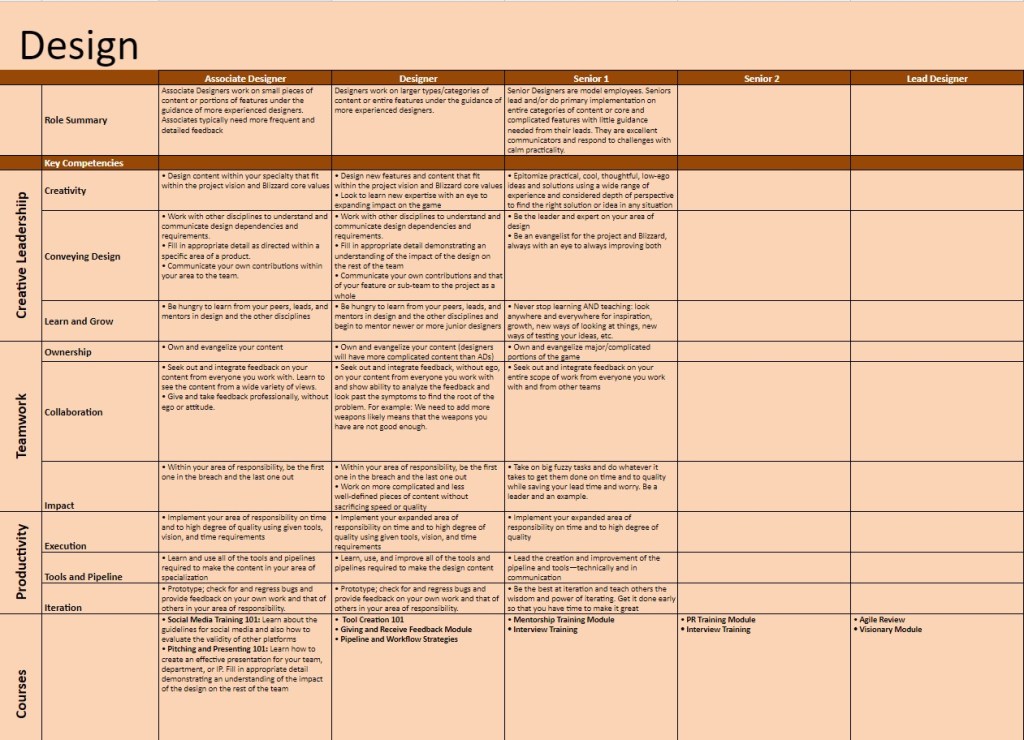
Along with plotting out the career progression plans covering technical and soft skills, I was also able to launch the very first Design Mentorship Program. I assembled a leadership council of team representatives along with a Way2Play Hero (an ethics and compliance representative) to collaborate on the scope, details, application and matching processes, and execution of the pilot program. Our 94-person pilot program, which matched seasoned designers with mentees, resulted in several promotions!
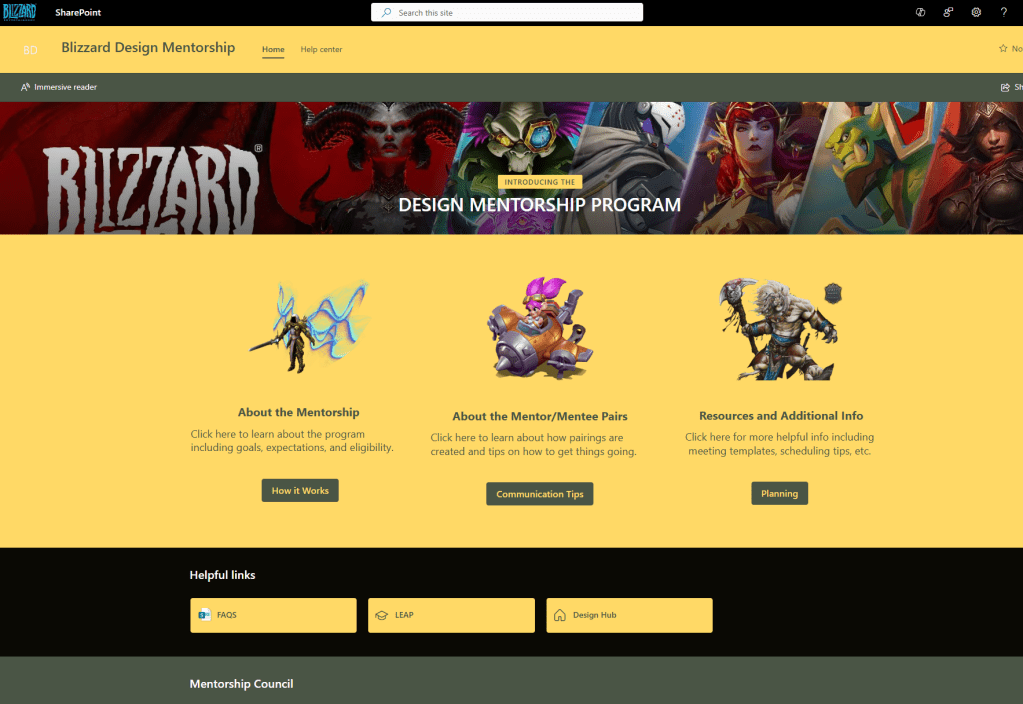
Individually, I took care of all communications between mentorship pairs, program advertisements and induction, and maintaining a website with information and resources about the program.
 AEF Portfolio