
INCLUSION & ACCESSIBILITY
Blizzard Entertainment’s game, Overwatch 2, is a first person shooter game where a former elite strike team of multi-cultural heroes must reunite to fight a world threat and restore order. The heroes for the game come from all backgrounds, orientations, shapes, sizes, etc. Ideally, a company would involve authentic representation when creating these heroes and worlds, and Blizzard did just that. I worked with our Story and Franchise Department and the Overwatch team to set up consultations with authentic and vetted representatives to give feedback on character looks, motivations, backstories, and all the visual and auditory assets associated with these characters. Additionally, I worked with Blizzard on a very specific accessibility feature for one of our games (you can read about all these below).

ILLARI: Pictured in the top left, Illari is a Quechuan warrior hailing from Peru. After checking with our employee resource groups, we realized that we didn’t have any current employees who spoke the indigenous language of Quechua (only 13% of native Peruvians speak it today). To solve this issue, I brought on a Peruvian linguist who specialized in Quechua and a writer/historian of the Quechua-Peruvian people to give feedback to our creative teams on everything from voice lines and pronunciations to current political challenges in Peru. It was a very fruitful partnership rooted in authentic language and positive representation! Check out more about Illari in this video.
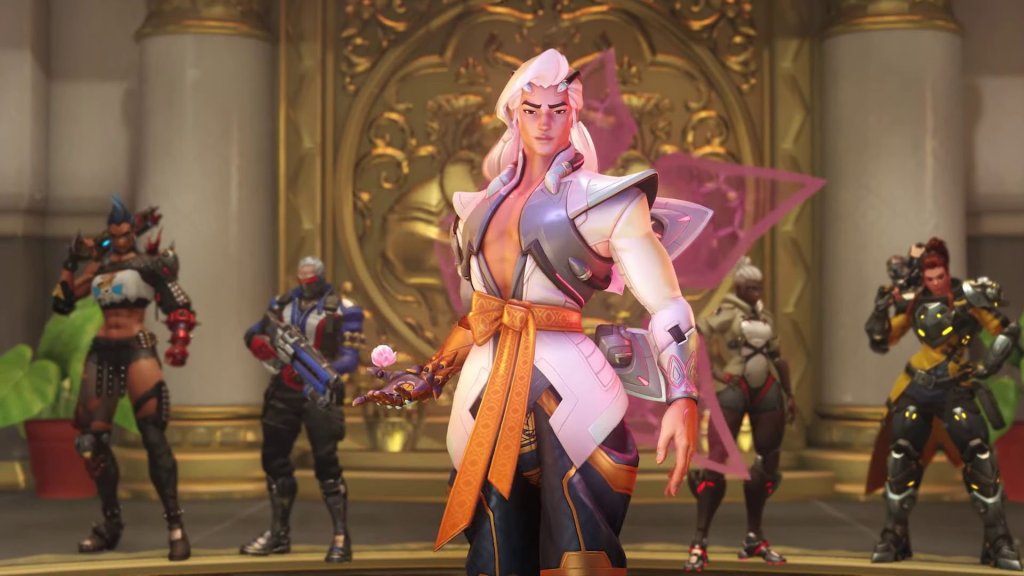
LIFEWEAVER: While Blizzard introduced LGBTQIA characters in 2016, Lifeweaver was the first openly pansexual character in the company’s video game universe. Since Lifeweaver’s origin story is rooted in the character’s home country of Thailand and the technology industry, the Overwatch team was committed to representing Lifeweaver’s story, including orientation, pronouns, and appearance, as inclusive and culturally accurate as possible. Our consultations for this character including speaking and learning from a Gender Scholar, Transgender Studies Expert/Thai national, and fashion designer focusing on queer looks. In addition to learning how to portray Lifeweaver’s sexual orientation, the consultations also influenced the character’s primary weapon: the healing blossom. You can get more information in this article.
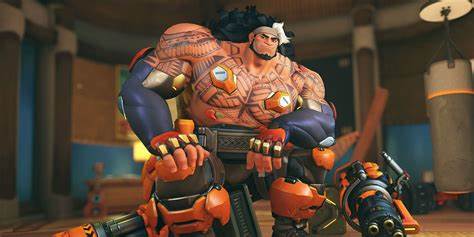
MAUGA: For the character of Mauga, the Overwatch character and design teams worked with local Anaheim artist Si’i Liufau, who specializes in Polynesian tatau design and implementation. It was important that Mauga’s tattoos told a story, and Liufau had a huge hand in designing the pattern on the final product. In additon to hiring Liufau, I also brought in a few cultural consultants from Samoa to weigh in on Mauga’s backstory, map, and hero capabilities. Want to learn more? Check out this article.

ARACHNOPHOBIA MODE: World of Warcraft came out with an accessibility filter for players suffering from arachnophobia– by replacing spiders with crabs. This decision came out through research and thought leadership from several departments including games user research, inclusive game design, DEI, and learning and development. Before the artists and GUR departments could begin, I worked diligently to find a pyschologist specializing in treating patients with arachnophobia. What we learned in our conversations that the movement and appearance of spiders were the most triggering. Therefore, GUR discovered that crabs were the most likable substitutes. I felt very grateful in playing a small part in bringing this accessibility feature to fruition! You can read more about it here.
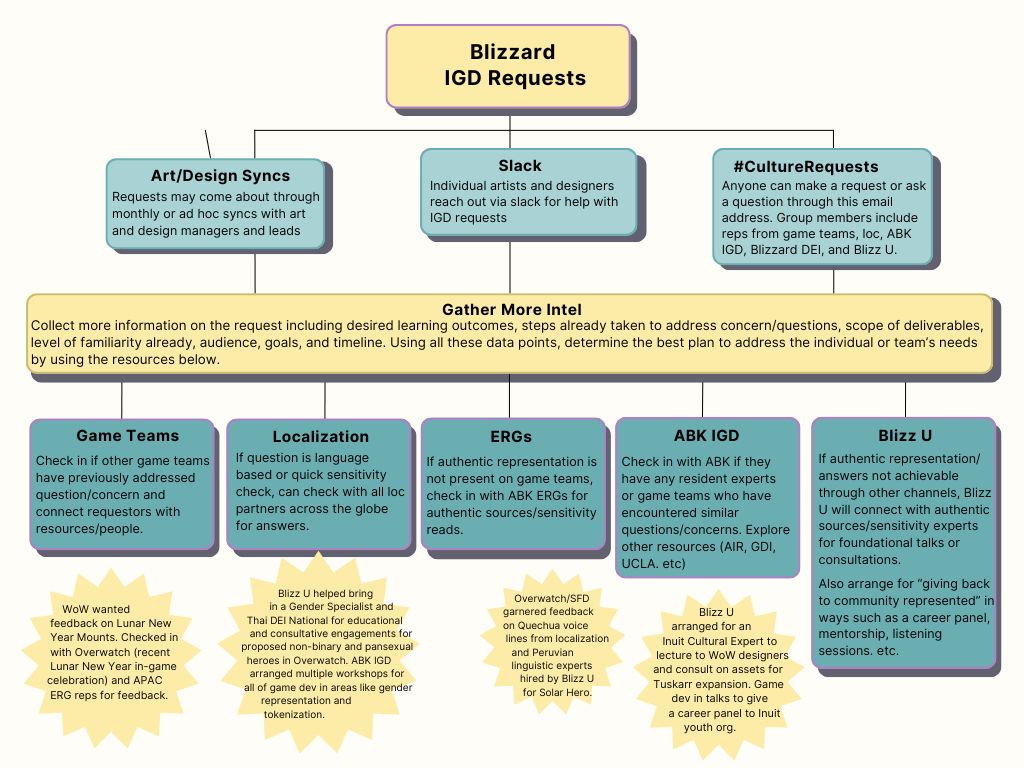
Here’s a draft of the Inclusive Game Development Pipeline I put together to expedite asset production and evaluation.
 AEF Portfolio